

Ontario Construction Report staff writer
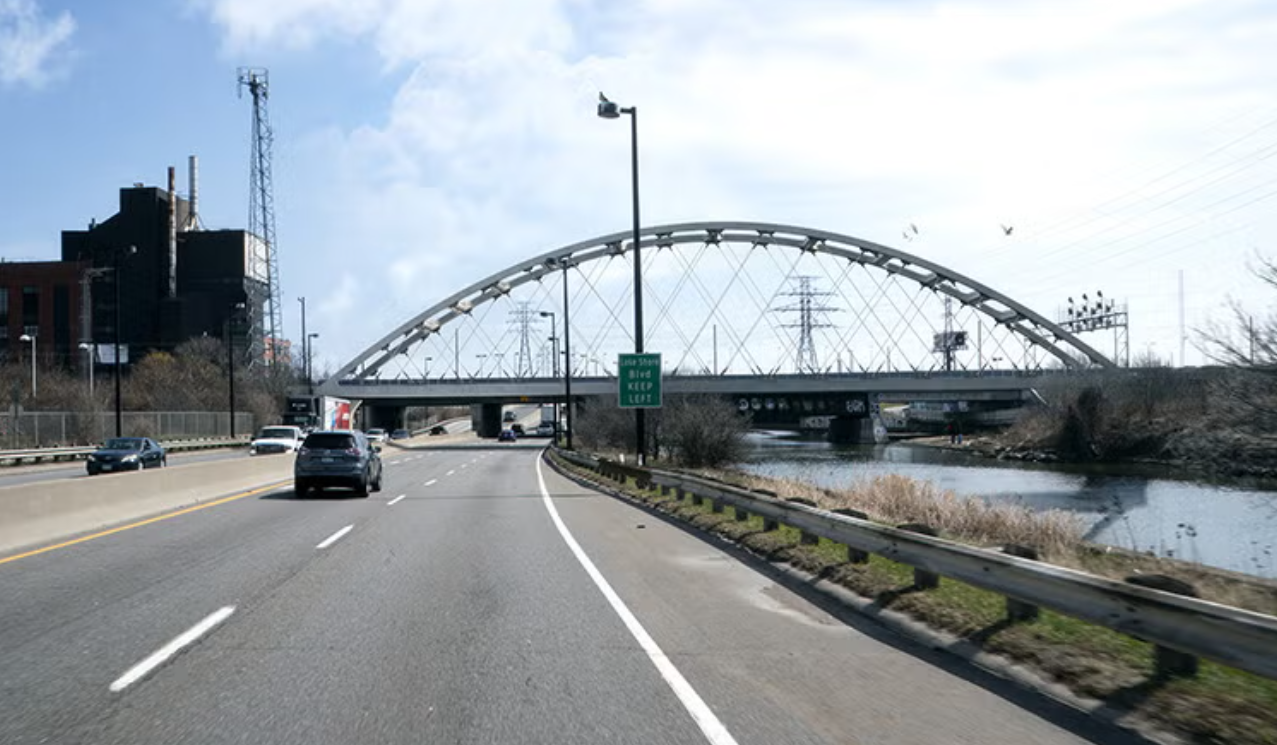
Workers have reached another construction milestone on the Ontario Line project with the completion of the main arch for the Lower Don Bridge, a structure that will eventually carry subway trains over the Don River and Don Valley Parkway in Toronto’s east end.
The bridge, located between the West Don Lands and Riverside neighbourhoods, is part of Toronto’s new Ontario Line subway project and is intended to improve transit connections across the city.
According to HDR Inc., the company that designed the structure, the Lower Don Bridge will be a steel network tied arch carrying two tracks over the Don River and DVP. The bridge will span 120 metres, measure 13.7 metres wide and rise 24 metres at its highest point.
HDR said the bridge was designed with the future redevelopment of the surrounding area in mind. The historically industrial neighbourhood is expected to evolve into a transit-oriented community anchored by the future East Harbour Transit Hub, which will connect the Ontario Line with GO Transit services.
The design emphasizes “graceful and subtle solutions” through modest structural detailing, architectural lighting and low-profile cable connections. Vierendeel-style lateral bracing between the arch ribs was spaced to complement the lighting plan and add visual interest to the structure.
HDR said the tied arch design was selected because it allows the bridge to span the Don River and Don Valley Parkway without requiring piers in the river or roadway below. Alternative bridge types, such as deck girders, would have required river piers, while cable-stayed designs were considered impractical because of limited anchorage locations and higher costs.
The project also presented significant engineering challenges in connecting the Don Yard tunnel portal on the west side with the future East Harbour Transit Hub to the east while maintaining clearance over the Don Valley Parkway and remaining in close proximity to an active GO Transit bridge where rail service cannot be interrupted.
HDR said flood risks and subsurface conditions also influenced the design. The Don River corridor is prone to flooding, so bridge abutments were placed outside flood limits. Engineers also conducted seismic studies because existing fill materials posed a potential liquefaction risk.
The bridge foundations use 2.4-metre-diameter drilled shafts anchored into bedrock. According to HDR, bedrock is located approximately 40 metres below grade on the west side of the site and about 20 metres deep on the east side.
Utility infrastructure added further complications to the project. Designers had to account for a sewer tunnel currently under construction near the west abutment, as well as overhead and buried hydroelectric transmission lines nearby.
HDR said conventional tied-arch construction methods were ruled out because of the site constraints. Building the bridge in place would have required extensive falsework over the heavily travelled Don Valley Parkway, while assembling the full arch off-site and lifting it into place was also deemed impractical due to surrounding infrastructure and limited working space.
The Ontario Line is expected to run from Exhibition Place to the Ontario Science Centre, connecting riders to more than 40 other transit services across Toronto and the Greater Toronto Area.