

Ontario Construction Report staff writer
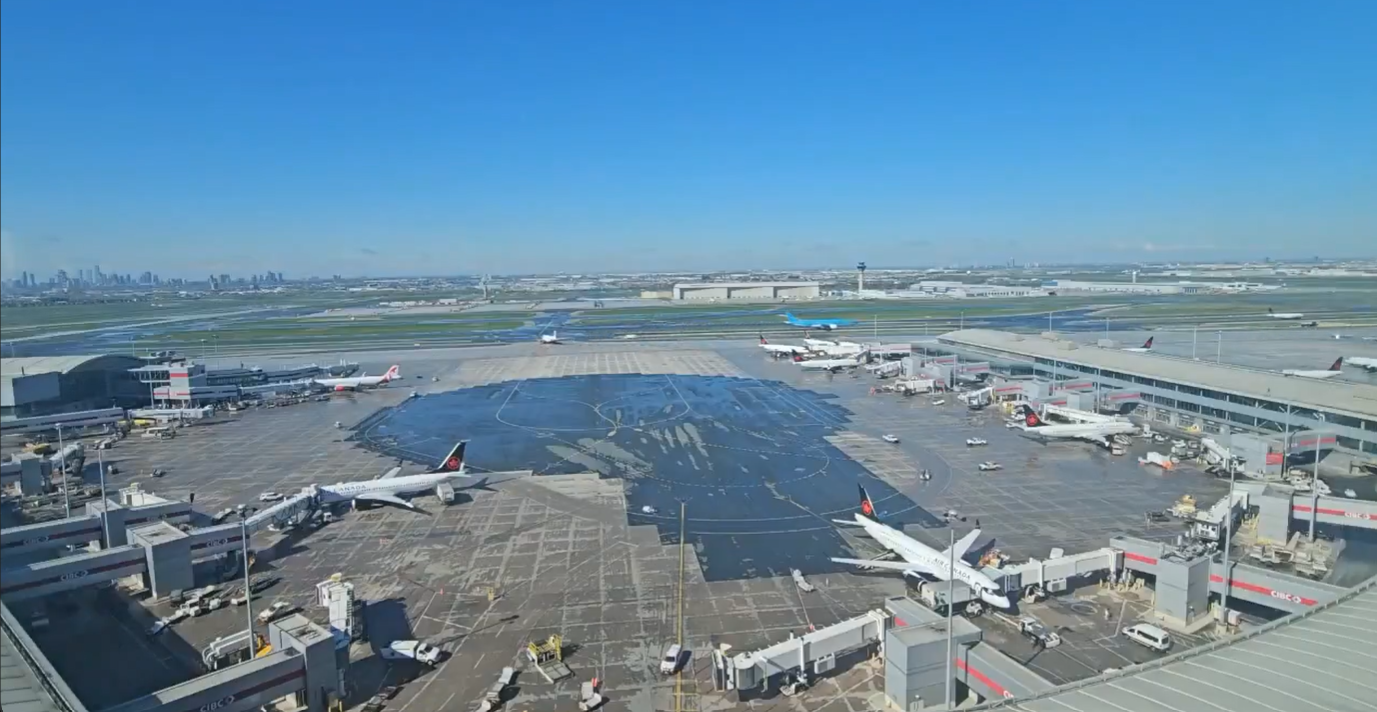
Phase one of a multi-billion-dollar modernization project is underway at Toronto’s Pearson International Airport, with plans to upgrade aging infrastructure and improve operational efficiency over the next decade.
The Greater Toronto Airports Authority (GTAA) marked the start of construction for the first major phase of Pearson’s Long-term Investment in Facilities and Terminals (LIFT), with a ceremonial groundbreaking May 11 attended by federal, provincial and municipal officials airport partners and construction teams.
The initial phase includes a $3-billion investment focused on airside and baggage infrastructure aimed at accommodating millions of additional passengers while improving airport operations.
“Today marks a pivotal moment, the culmination of three years of planning, analysis, competitive procurement and collaboration with industry partners and air carriers to deliver a state-of-the-art airfield that will make Toronto Pearson one of the most efficient and digitally-advanced airports in the industry,” said Deborah Flint, president and CEO of Toronto Pearson. “This is an investment that increases capacity for global trade with Canada. Passengers can be more confident in their journeys through North America’s 2nd most internationally connected airport.”
The main contractor for the first phase of the Pearson LIFT program is the Pearson Accelerator Construction Team (PACT), a consortium made up of:
- Kenaidan Contracting Ltd.
- Alberici Constructors Ltd.
- Amico Major Projects Inc.
- Obayashi Canada Ltd.
The consortium was selected by the Greater Toronto Airports Authority to lead the planning, design and construction of the “Accelerator” phase of the Pearson LIFT redevelopment program. The design team supporting PACT includes Egis, Mott MacDonald, WSP, Woods Bagot and Weston Williamson + Partners.
Planned upgrades include a new airfield lighting control and management system designed to improve visibility and aircraft guidance through an intelligent network that responds to movement on runways and taxiways. The project also includes expanded electric vehicle charging infrastructure, cleaner heating systems and energy network upgrades intended to support lower-emission airport operations.
Construction also includes about 30 kilometres of baggage infrastructure, including new baggage carousels in Terminal 1, as well as cameras and sensors intended to identify problems earlier and reduce baggage system downtime.
The airfield itself will undergo a major renewal and expansion covering approximately 2.2 million square metres — roughly equivalent to more than 1,000 NHL-sized hockey rinks. Plans include new aircraft stands and a high-speed taxiway intended to improve aircraft movement between gates and runways and support up to 28,000 additional passengers per day.
The entire Pearson LIFT program is intended to modernize facilities, expand operational capacity and advance technology-driven systems to support long-term growth.
According to the GTAA, the Pearson LIFT program is expected to expand Toronto Pearson to handle up to 65 million passengers annually, create 16,000 new jobs at the airport, support more than 160,000 jobs across Canada and contribute $30 billion to the economy.
Additional details on future phases of the modernization program, including facility revitalization and expansion plans, are expected to be released later this year.